
Getting God Out of the Box We Built for Him

Updated: Jul 27
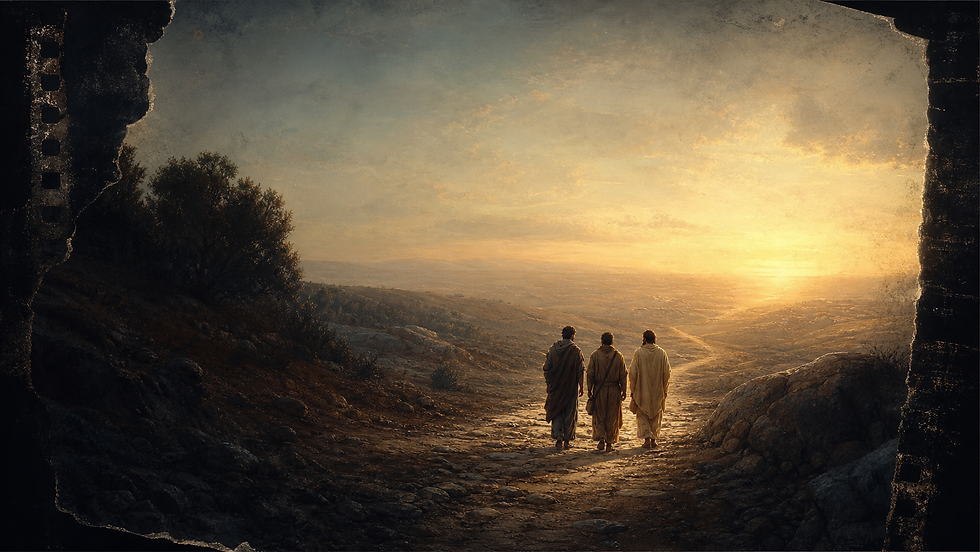
Last night in our Ebenezer group, we talked about a concept and a truth that we all have heard before: God will make a way.
I know, I know. That sounds like something you'd put on a coffee mug or one of those church signs out front where half the letters are leaning sideways. But I don't want to rush past it just because it's familiar.
Because if I'm honest, I do believe God will make a way. I just usually have a very strong opinion about what that way should look like.
And that's where the Lord started dealing with me. Not gently, like "Oh, Jason, you precious little thing." More like, "Jason, this isn't just a prayer, buddy. This is a judgment."
That got my attention.
I was praying about some very real things. Family things. Ministry things. Transition things. Stuff that actually needs decisions, wisdom, preparation, and timing. I'm not talking about imaginary pressure here. I'm talking about real life.
But somewhere in the middle of praying, I realized I wasn't just bringing my request to the Lord. I was bringing Him my preferred outcome. The way I'd already decided it had to happen. I was handing Him the box and kindly asking Him to step into it and bless it. That's a problem, right?
Now, there's nothing wrong with having a desire. Jesus had a desire in the garden. He said, "Father, if You are willing, remove this cup from Me." But He didn't stop there. He said, "Nevertheless, not My will, but Yours, be done" (Luke 22:42).
That's the difference. A desire says, "Father, this is what I'd love." A judgment says, "Father, this is the only way this can work." One keeps the conversation and the connection open. The other closes the door without us even realizing and calls it faith.
That's the part that hit me hardest. The Lord wasn't asking me to stop caring, or to pretend the situation doesn't matter, or to become one of those people who says "whatever happens, happens" while secretly chewing a hole through the inside of their cheek. He was asking me to stop deciding ahead of time what His answer has to look like.
Because when I judge the outcome, I stop hearing. I stop listening for further instruction.
That was the phrase that checked me. Every time I start judging the outcome, I stop hearing Him. I start listening for confirmation instead of direction. I start listening for God to agree with what I already think. I start measuring His movement by whether it matches the picture I've already built in my head.
That's not trust.
This one's personal for me. I like answers. I like preparation. I like seeing the moving parts and knowing what needs to happen before it happens. That's my temperament. I'm a strong C in the DiSC Temperaments profile system, so my comfort zone is planning, organizing, troubleshooting, and trying to make sure we don't drive the ministry bus off a cliff.
That can be useful if working out of the redeemed parts of me. It can also become a cage if working from the pieces of me that haven’t yet seen the light of the Lord’s sanctification.
I think some of us have called our cage wisdom. We say, "I'm just being practical." And sometimes we are. But sometimes we're scared. Sometimes we're trying to get ahead of God because waiting feels like dying. Sometimes we're trying to force the next step into view because not knowing makes us feel exposed. And if we're not careful, we'll grab the handlebars from the Lord and say, "I'll take it from here."
Then we wonder why we lost our peace.
Last night, one of our friends brought up Lot in Genesis 13, and that story impacted me. Lot looked at the plain of Jordan and it looked good. Well-watered. Fruitful. It looked like the better deal.
But he pitched his tents near Sodom. Who would do that? Didn’t he know?
That's the danger. Some things look green from a distance because you can't yet smell what's fertilizing the grass. I know that's not pretty sounding, but it's true. There's something fertilizing every yard. (Thank you Shelley for the poo analogy lol)
Lot chose what looked practical, profitable, and obvious. Abraham stayed in the place of promise with God. Lot took the easy-looking option, and it came with a package he didn't fully understand. Not everything that looks good is God. Not every open door is His direction, and not every well-watered plain is where you're supposed to pitch your tent.
That's why we have to behold Him.
Behold. Not glance at Him. Not consult Him after we've already made up our minds. Not use Him as spiritual tech support when the plan we built starts throwing error messages.
Behold Him.
Psalm 27:4 in the Amplified says, "One thing have I asked of the Lord, that will I seek, inquire for, and insistently require... to behold and gaze upon the beauty of the Lord and to meditate, consider, and inquire in His temple."
I love that it says both. Behold and inquire. Because beholding God isn't sitting there mute with a blank stare pretending you have no questions. It's relationship. It's looking at Him long enough to remember who He is, and then asking from that place.
That's different from panic asking. Panic asking says, "Lord, hurry up and fix this before I lose my mind." Beholding says, "Father, I want to know You in this. I want to see You correctly. I want to hear You without fear doing all the talking."
Those are very different prayers.
One of the things we talked about was the Father's heart in the prodigal son story. Most of us know the younger son ran off, wasted everything, and came home broken. But the older brother was missing the Father's heart too. He was home, but he wasn't free. He was near the father and still thinking like a servant.
The father said to him, "Son, you are always with me, and all that is mine is yours" (Luke 15:31).
That sentence will undo you if you let it. Because a lot of us aren't living like sons and daughters. We're living like tired employees trying not to get written up. We're in the Father's house, still asking if we're allowed to open the refrigerator.
That reminded Gwen and me of a story with our oldest when she was a teenager. She came home one night, walked past us while we were sitting on the couch, and out of nowhere said, "You never feed me."
We just looked at each other like, what kind of alien abducted you and dropped you at our front door? Dinner had been made. The pantry was full. The fridge was stocked. There was food everywhere.
Then she added, "I'm wasting away."
At that point you just wonder if you need to start spoon-feeding this child.
She wasn't starving. She was fixated.
And that's exactly what happens to us. We get so locked in on the one thing we want, the one way we think it should happen, the one need we think isn't being met, that we forget the house is full. We forget the Father isn't stingy. We forget He already knows what we need before we ask.
And then we accuse Him with our anxiety. Maybe not out loud. Maybe not in a rebellious way. But in our hearts we say, "You're not feeding me." Meanwhile the Father is saying, "The house is full. Come in. Sit down. Open your eyes."
That connects to another scripture someone brought up from 2 Samuel 12. After David sinned with Bathsheba, the Lord said through Nathan, "I gave you your master's house... and if that had been too little, I would have given you much more."
That line is stunning. David reached for something in sin that the Father still wasn't withholding in goodness.
That's what desire does when it disconnects from trust. It starts reaching. It starts taking. It starts building an Ishmael because waiting on Isaac feels impossible.
But the Father's heart isn't lack. He's not sitting in heaven saying, "Let's see how miserable I can make them before I answer." That's not our Father. He's Jehovah Jireh, the God who sees and provides.
Garrett shared an old healing teaching that framed John 14 this way: if what's needed seems missing, God is still able to provide it. If there's no way, He can make one. If there's no visible provision, He can provide. If what you need seems absent, He's not witholding.
That doesn't mean we get to boss God around or turn prayer into a vending machine. It doesn't mean we skip maturity, wisdom, or yielding. It means we don't have to panic when we can't see the supply. He's not limited to our visible inventory.
That's where my self-judgment came up too.
I shared last night that when I was younger, I was a straight B student. I could not get an A no matter how hard I tried. I worked hard, studied hard, beat myself up over it. And somewhere along the way I put a label on myself.
Mediocre. A little above average. Pretty good at tinkering with things, but not excellent.
That became part of how I saw myself. And the problem is, that lie doesn't stay in school. It grows up with you. It puts on adult clothes. It learns ministry language. It starts sounding humble.
So when the Lord says, "Do this," something in me says, "Okay, but don't expect too much from me. I'm probably not going to get an A on this."
That sounds humble. It's not. It's a lie about identity. Because the Lord never asked me to do it without Him.
That's the whole point. I was acting like obedience meant God gives the assignment, I step away from Him, I complete the task, and then I come back and report how it went. That's not relationship. The relationship should never go on pause so we can go do something for God.
I don't want to leave Him to obey Him. I want to obey Him with Him.
That may be the cleanest way I know to say it. Because when I leave the place of beholding, I start carrying things I was never built to carry by myself. I start measuring the assignment by my ability. I start looking at the clock, the pressure, the unknowns. It stops being about finding Him and starts being about finding answers. But it's not about me finding the answers to what to do next. It's me finding Him.
And what we behold, we empower. We give power to whatever gets our attention.
If I behold the problem long enough, the problem becomes lord in my imagination. If I behold the timeline long enough, the timeline starts discipling my emotions. If I behold the missing piece long enough, lack becomes the loudest voice in the room.
But if I behold Jesus, everything else has to find its proper place.
The problem may still be real. The deadline may still be real. The family situation, the ministry pressure, the pain in your body, the unanswered question, all of it may still be real. But it's no longer the biggest reality in the room.
He is.
That's why waiting matters. And I'll be honest, waiting is not my favorite spiritual fruit. In fact, I don't know anybody who puts that on their list of favs. "Lord, give me more waiting." No, thank you.
But Isaiah 40:31 says those who wait on the Lord will renew their strength. The Hebrew picture behind that word carries the idea of being bound together, twisted, entwined.
That helps me. Waiting isn't doing nothing. Waiting is being entwined with Him. It's like running a three-legged race with the Lord. When He moves, I move. When He stops, I stop. When He shifts, I learn to feel His leading instead of yanking us both sideways because I saw something shiny in the distance.
That's not passivity. That's yielded movement. That's surrender with relationship still attached.
And that's where transformation happens. Not in the frantic place. Not in the "I have to figure this out before the Lord gets here" place. Transformation happens while we behold. While we inquire. While we stay. While we keep our Bible-heart turned toward Him in the middle of the unknown.
So here's where I ended up after last night.
I need to release my judgments about how this has to go, and about the timing. I need to release the self-judgment that says, "I can only do so much." I need to let go of the pressure to get an A on an assignment God never asked me to complete without Him.
And I need to come back to the simple place.
Father, I want to be with You. Jesus, I want to hear You. Holy Spirit, I want to move when You move.
That doesn't mean there's no work to do. There's always work to do. Emails have to be answered. Decisions have to be made. Family has to be cared for. Websites have to be fixed. Books have to be finished. Life doesn't pause because we had a spiritual moment.
But the work has to happen from presence, not panic.
That's the course correction. Stay with Him while doing the next thing. Don't leave Him to go obey Him. Don't build Him a box and call it faith. Don't call your fear wisdom, or your self-judgment humility. And don't call the greenest-looking field God's provision until you've asked the Lord where He's leading.
Behold Him. Inquire of Him. Wait entwined with Him.
And when He makes a way that doesn't look like the way you had in mind, don't be so committed to your box that you miss His goodness.
Because God isn't limited to what we can see, what we can prepare for, or the pantry we already checked.
The house is full. The Father is good.
And if He has to make a way where there is no way, He's very capable of doing exactly that.


Comments